
Every winter, Central Texas investors face a choice: the "hustle" of emergency plumbing calls at 2:00 AM, or the "harmony" of a well-prepared portfolio.
In our experience managing properties through Chicago winters and Austin freezes, we have learned that weather events are not "disasters" to be feared—they are operational variables to be managed. The difference between a minor maintenance ticket and a catastrophic insurance claim often comes down to a single protocol: Preparation.
We have reviewed the latest Austin Water 2025 Preparedness Guidelines to create this operational framework for local residential investors.
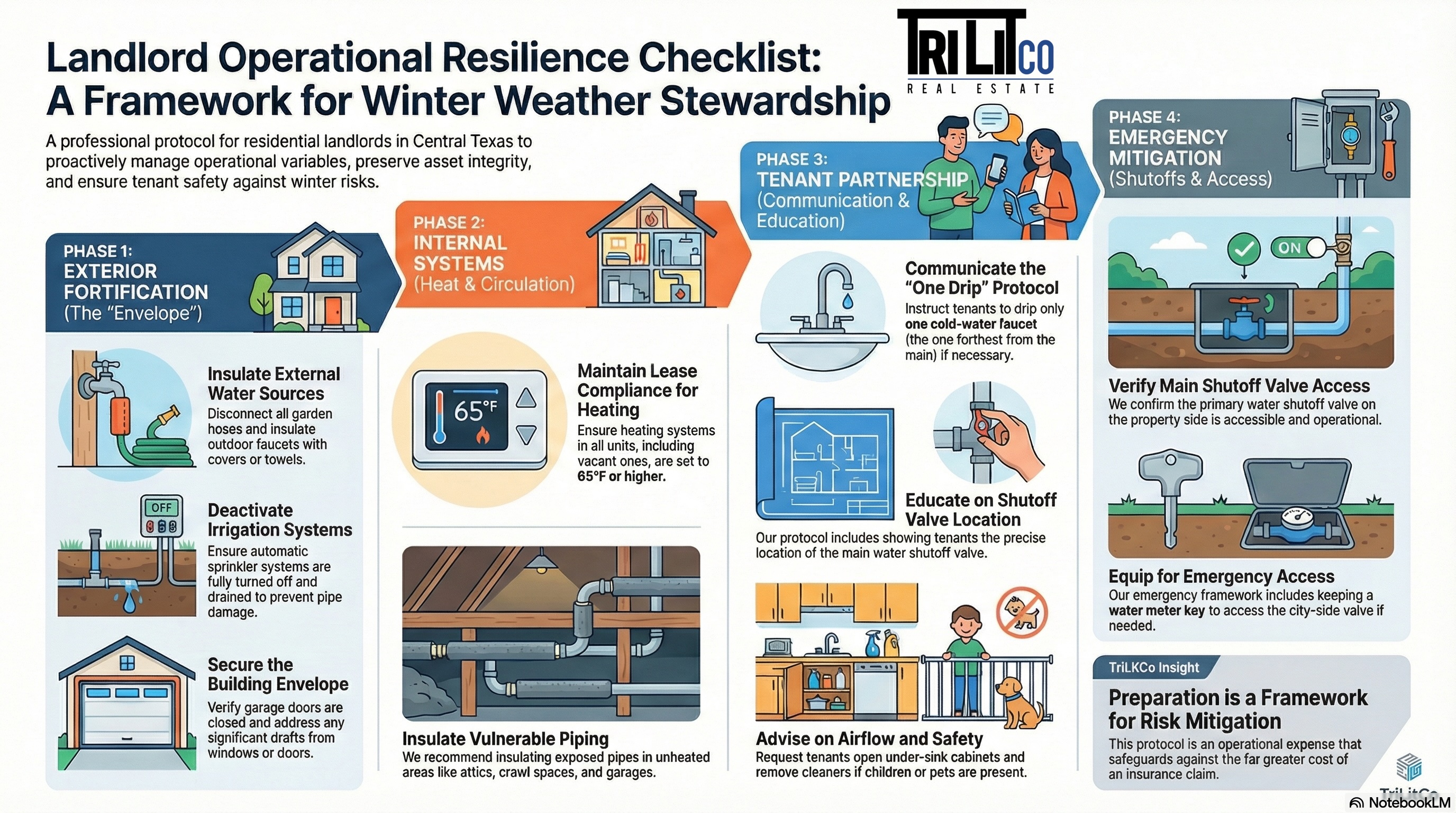
1. The External Shield: Seal the Envelope Your first line of defense is the property’s exterior. Austin Water recommends tightly closing all doors and windows to the outside and repairing any drafty areas before temperatures drop.
Spigots: Disconnect all garden hoses. This is the most common cause of burst pipes we see. Wrap faucets with towels or Styrofoam insulators.
Irrigation: Turn off and drain automatic sprinkler systems.
The Garage: If water heaters or pipes are located in the garage, keep the garage doors closed for the duration of the freeze.
2. The Internal Systems: Heat and Circulation The goal is to keep the internal temperature stable and warm air moving.
Thermostats: If you or your tenants are leaving town, Austin Water advises setting the thermostat to 65 degrees or higher—do not just turn it off.
Airflow: Open cabinets beneath kitchen and bathroom sinks to allow warm air to circulate around the pipes. Note: Ensure tenants remove toxic cleaners from these open cabinets if children or pets are present.
Insulation: Unheated areas like attics require pipe insulation. Hardware stores carry specific insulation materials that are a small expense compared to the cost of a burst pipe.
Tankless (On-Demand) Units: If your property utilizes a tankless water heater—especially on an exterior wall—it requires specific attention.
Power is Critical: Most tankless units have internal freeze protection heaters that only work if the unit has power. Ensure the unit remains plugged in.
The "Isolation" Valve: Operational maturity means having "isolation valves" installed. These allow you to drain the water from the unit quickly in a power outage without draining the whole house—a critical step to protect the equipment.
3. The "Drip" Protocol (Clarified) There is often confusion about "dripping faucets." The operational standard from Austin Water is specific:
When to Drip: Only drip if necessary, after other measures (sealing drafts, opening cabinets) are taken.
How to Drip: You do not need to run every faucet. Drip one cold-water faucet slowly—ideally the one furthest from the main shutoff valve.
Power Outage Protocol: If power is lost for more than 24 hours, stop dripping faucets and turn off the water at the main meter to preserve system pressure.
4. The Stewardship of Shutoff Valves Operational maturity means knowing where your controls are. Every property owner—and every tenant—must know the location of the water main shutoff valve.
Owner’s Valve: Usually located on the property side of the meter box.
City Valve: If the owner's valve fails, you may need a water meter key to access the city side. We recommend keeping a water meter key in your emergency kit.
The Bottom Line: You cannot control the weather, but you can control your systems. By implementing these protocols now, you are acting as a true fiduciary for your asset—and ensuring a quieter, safer winter for your tenants.
For specific guidance on your property’s plumbing, consult a licensed plumber. For more information, visit Austin Water.